

nothing changed
A short story about a young man whose isolation was so deep that even a pandemic went unseen.

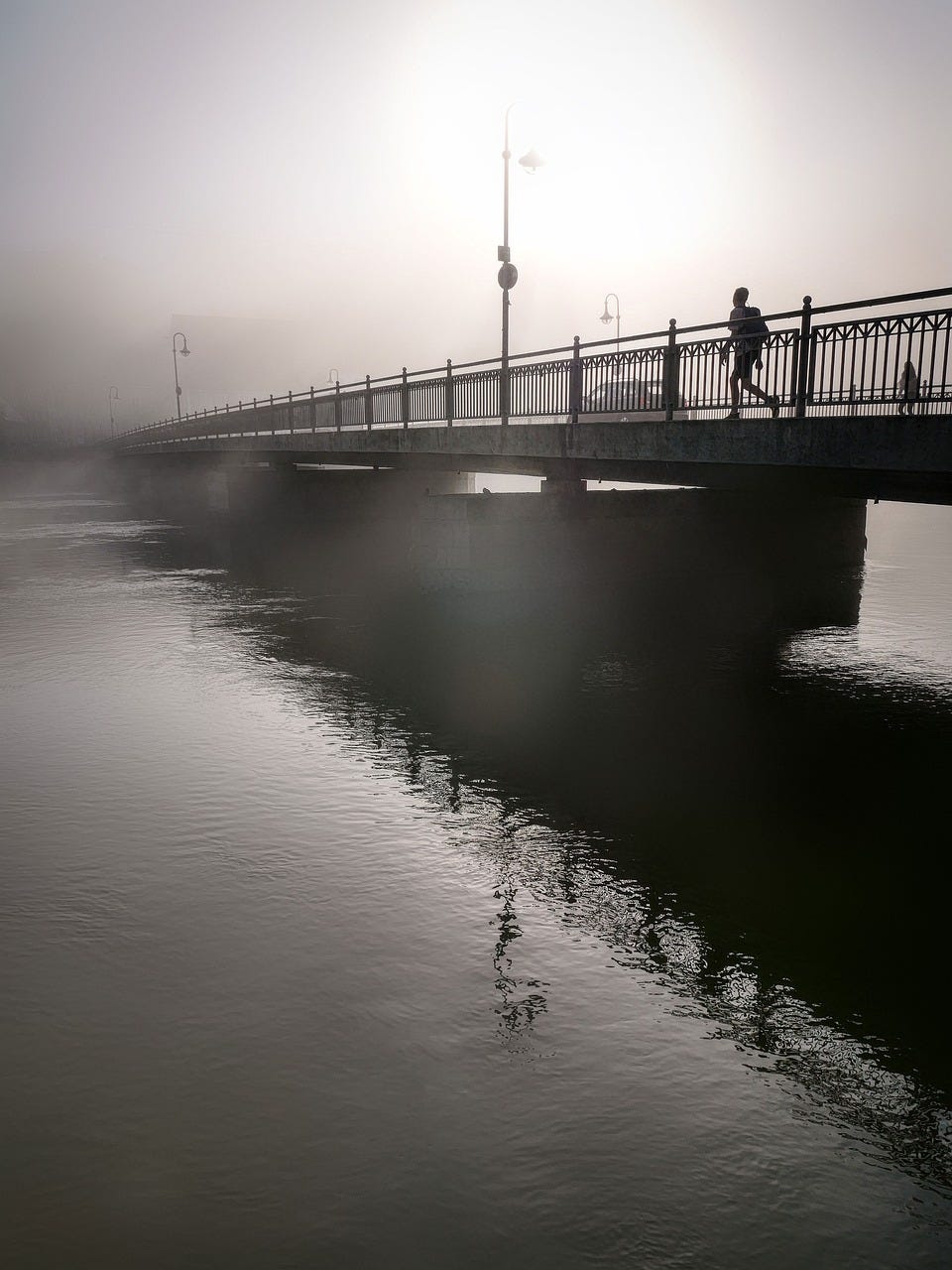
The fog hadn’t lifted in days. It hung low over the city centre, softening the edges of rooftops and smudging the skyline into something unreadable. From his flat window, the street below looked like a photograph left too long in the rain. Lights moved occasionally in the blur—a car passing, a figure walking quickly with their head down—but mostly it was still. The world, it seemed, had decided to press pause.
Inside, the air was stale and warm. Miles lay on his side, half-twisted in the duvet, staring at the place where the light from the window spilled onto the carpet. The day had already tilted toward afternoon. He’d been awake on and off since ten but hadn’t moved beyond shifting his weight or pulling the blanket up when the room cooled. The ache in his chest was back. More like pressure than pain. Like something was sitting inside him, dense and heavy, draining away the energy it would take to rise.
He hated mornings. Waking meant remembering he was still here, that another day was waiting for him to fill. He could never think of a reason to get up. Not one that was convincing to him. The thought of making toast, of brushing his teeth, of standing under a shower—all of it seemed absurd, like rehearsing lines for a play he’d already quit. He felt both too heavy to move and too hollow to matter.
There were clothes on the chair he hadn’t touched. A cereal bowl sat on the floor from the day before, a spoon limp in a film of grey milk. His phone vibrated. Once. He didn’t check it. He didn’t want to know who it was, or what they wanted from him, because whatever it was, he knew he would fail at answering it properly.
Somewhere outside, a siren rose and fell. Then another. They sounded far away, or perhaps muffled by the fog. He sat up slowly, his spine protesting, and reached for the mug on the windowsill. Cold tea. He sipped it anyway.
He pressed his palms hard into his eyes until colours sparked. He wanted to cry but couldn’t. His throat ached with the pressure of it, but nothing came. That was the worst of it—not even the release of tears. Just the pain and the blankness layered over it, as if grief had frozen inside him.
The fog made it easier, in a way. Gave shape to the vague dread inside him. When he looked out and saw nothing clearly, it matched what he felt: like moving through days with no contours, no landmarks. Just more of the same. Fog outside. Fog inside.
Time had started to slip, blurring Thursday into Sunday. He found old mugs of tea and couldn’t remember making them. The walks he used to force himself to take—a pathetic pantomime of participation—had fallen away. There was no destination worth the damp shoes. No reason to go. He never felt wanted anywhere.
He moved to the sofa eventually, wrapped in the duvet. Turned on the TV and flicked through channels without sound. A game show. A rolling news banner in red letters: “Prime Minister addresses nation tonight.” He didn’t notice. Settled on a nature documentary. Mist on a forest floor. Fog curling through trees.
A knock at the door startled him. Two short taps. He froze. No one ever knocked. The buzzer downstairs hadn’t sounded. He moved quietly, cautiously, toward the door and looked through the peephole. Nothing. Then he looked down.
A plastic bag, knotted at the top. Someone had left groceries: a loaf of bread, a carton of milk, a note written in felt-tip on the outside. He squinted to read it.
“Thought you might need this. Mum x”
He stared at the bag for a long time. Didn’t open the door. Just rested his forehead against the wood and closed his eyes. It would have been easier if she hadn’t written anything. Easier if she hadn’t noticed him at all. Her care scraped against his own certainty that he wasn’t worth the effort.
He noticed the curve of her handwriting, the way the ink had bled slightly on the plastic. A barely-there smiley face drawn at the end. He sat down on the floor with his back to the door, arms around his knees.
Later, he sat by the window with the bread in his lap, eating slices without butter. The fog outside had begun to thin, just slightly, enough to make out the red brick of the building opposite. For the first time he noticed something unusual: tape on the pavement, forming boxes. People standing inside them like pieces on a game board, rigidly apart. One of them bent to tie a shoelace but didn’t step out of the box.
His phone was on the armrest beside him. He turned it on. Notifications rolled in. A missed call from his mother. A voicemail. He played it.
“Hi love. I dropped some things off at your door. Just a few bits. I know it’s all a bit strange out there right now. But don’t worry. We’re all fine. Let me know if you need anything.”
He pressed his hand to his mouth.
The fog was still outside, but something in it had shifted. The silence wasn’t empty, he realised. It was full. It was thick with a shared dread he hadn’t been paying attention to, a world holding its breath just beyond his door.
He looked at the note again. “Thought you might need this.” The words were simple, ordinary. Yet they burned. He couldn’t understand why even the smallest kindness hurt so much.
He folded the note carefully, smoothing out the plastic, and placed it on the table. Then he pulled the curtains open all the way. The light wasn’t much, but it filled the room differently now.
Outside, the fog continued to lift, slow as breath. Inside, the heaviness stayed, anchored in his chest, thick and immovable. Nothing had changed.
I really enjoyed reading this. Your writing flows so naturally, and I was drawn to your introspective style because it’s something I love engaging with as well, so it resonated deeply. This is a raw and human piece, and I think many of us can see ourselves in your character. “Waking meant remembering he was still here, that another day was waiting for him to fill. He could never think of a reason to get up. Not one that was convincing to him.” I too have felt this way at times in my life. Thank you for writing this. I subscribed to keep up with your work, and I hope you’ll feel like doing the same if my pieces resonate with you. I’m looking forward to deepening our exchanges.
This reads almost like a journal entry, and really conveys Miles' internal struggles well. Mental illness/health is a topic that I, too, am passionate about so the story resonated with me. Some of the descriptions here were beautiful. The opening images were so captivating, especially of the street looking like a photograph left too long in the rain. And the idea of fog giving shape to his innermost feelings is thought-provoking. I'm curious to read more as you delve into these themes.