

It's expensive to be ordinary
On rising costs, shifting expectations, and the changing shape of everyday life

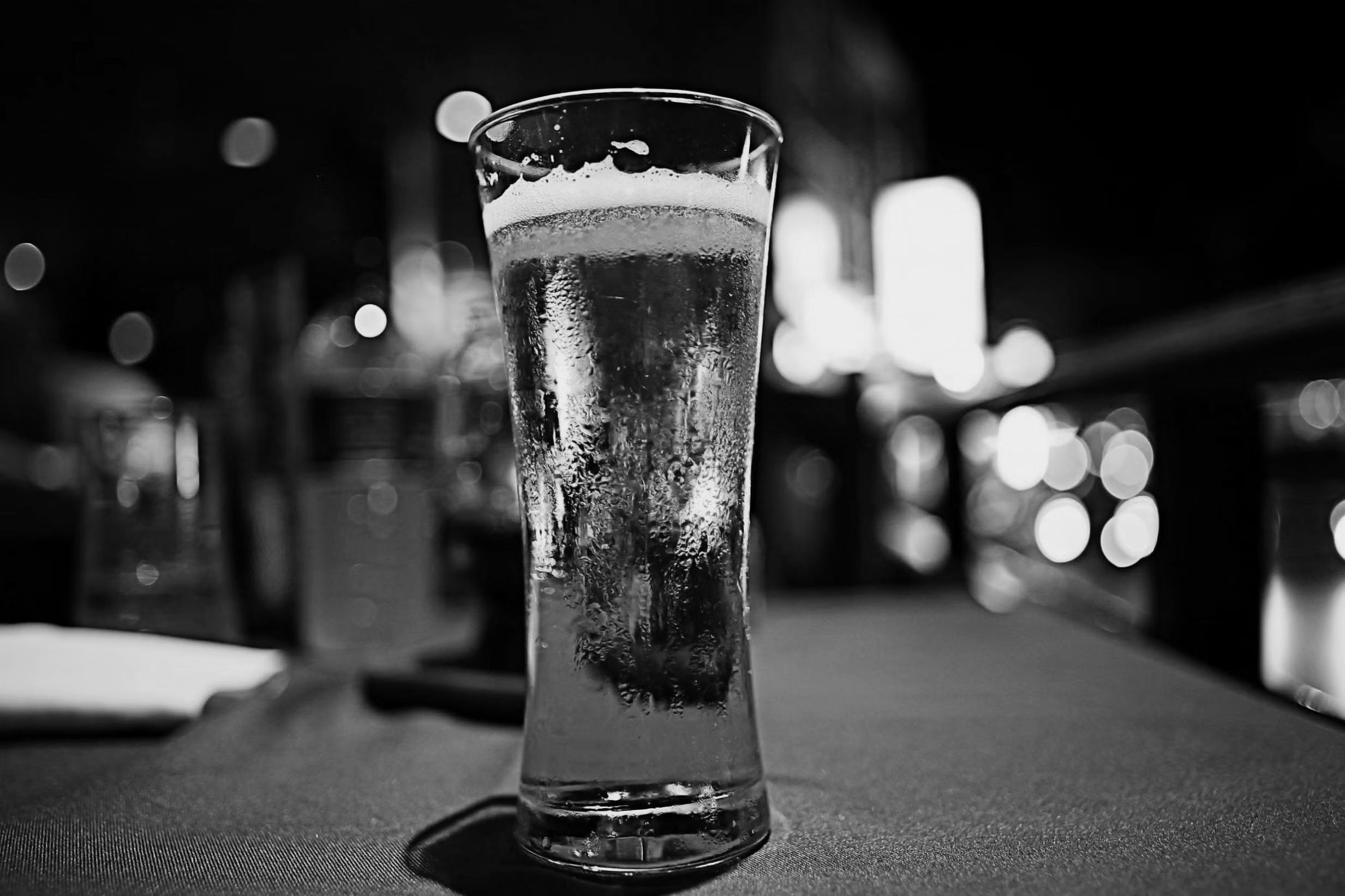
I was in the gym recently when I overheard two men talking about a new bar that had opened nearby. One of them said the drinks were very reasonably priced, at £6.75 a pint. I stopped mid-set, rudely entered their conversation and asked if I had misheard, because £6.75 sounded insane. They both looked at me slightly puzzled before saying, strangely in unison, “Yes mate.”
I don’t buy much alcohol these days, but I remember it being much cheaper when I regularly went on nights out around the turn of the century. I checked and I was not misremembering; the average price of a pint in England in 2000 was £1.60. For a long time, going for a drink was one of the simplest and most accessible ways of connecting with other people, woven into the fabric of communities.
It is not only the numbers that have shifted, but the quiet understanding people carry about what counts as normal, because the boundaries move and people move with them, often without quite noticing. It’s the kind of gradual adjustment Orwell wrote about, where change does not arrive dramatically but settles through habit and language until it feels natural.
You begin to notice it in small, ordinary decisions. When you fill the car and realise it costs far more than it did a few weeks ago. This week a garage worker, half joking, told me it was “Trumpflation”. Much of the current government’s language has been about growth, about bringing down the cost of living and restoring a sense of stability, but events elsewhere have a way of exploding those promises, and what happens in places like Iran or Ukraine does not just stay there. The idea that any government can fully shield people is becoming harder to sustain.
You see it when you take children to the cinema and find yourself doing the maths beforehand because tickets and snacks can easily reach fifty pounds, or when you think about going for a drink after work and realise it is no longer something that sits quietly in the background of the week.
What once felt spontaneous becomes planned, and what once felt assumed becomes something to be considered. Invitations are turned down more often, sometimes with an excuse and sometimes without, and over time people begin to participate less in the things that once gave texture to their lives.
I saw this in my last workplace when we had to cancel the Christmas party because too many people could not afford it, even though no one wanted to say that out loud. It created a unique discomfort because what disappears is not just an event but the shared experience surrounding it, the sense of being part of something, however small.
This kind of narrowing is not evenly distributed, as it tends to appear first at the margins and then work its way inwards. People in steady jobs who would once have assumed they were comfortably part of things begin to step back, and it’s persistent enough to change how inclusion feels in practice.
The longer you sit with it, the harder it becomes to ignore the generational dimension. In some of the local authority work I’ve been involved in, people are now told quite plainly that they will never get social housing, which would have sounded extraordinary ten years ago. Council housing was rarely luxurious, but it was stable and affordable and provided a foundation for everything else. Today, a council house is like a ticket to Willy Wonka’s Chocolate Factory. My grandmother lived in one, but my children probably never will.
When I think about my own children, I can see that something has changed direction. My parents have told me stories about wearing hand-me-down clothes from older siblings, sometimes of a different gender, and making do was part of life at the time. My own experience involved more comfort, more choice, and a general sense of generational progress. That sense of forward movement felt natural, and it is only when it becomes uncertain that you realise how much you relied on it.
There is always a risk in looking back like this, because psychologists describe what they call the reminiscence bump, which is the tendency to remember early adulthood with unusual clarity and coherence. Memory smooths things out, removes friction and boredom, and leaves behind something more orderly than it really was, making it difficult to separate what was genuinely better from what is simply more vividly recalled.
Even so, certain memories return with sharpness. I’ll never forget sitting in my parents’ living room during Euro 96, and I can still picture bleach-blonde-haired Paul Gascoigne’s goal against Scotland. Probably my favourite goal ever because of the smoothness of movement, but also for the moment it captured.
Around that time, life revolved around small rituals that felt oddly significant, such as watching football scores update on Teletext and pressing refresh again and again because it was the closest thing to live coverage available, or going to the local video shop and standing in front of the shelves for longer than necessary, trying to decide what to take home while knowing that whatever you chose had to last the weekend.
Early dial-up internet arrived with a sound I can still hear on demand, one that suggested it may not connect at all, and once it did, you had to wait for pages to load and for images to appear line by line, knowing that someone picking up the phone in another room could end it without warning.
These experiences were not necessarily better, but they felt sufficient, as there was less sense of comparison and less awareness of what you might be missing, which perhaps made ordinary life easier. As George Eliot observed in a different context, much of life is lived through the “unhistoric acts” that quietly shape how we experience the world, and it is often those that become hardest to hold onto when conditions change.
I could easily turn this into an essay about things being better, although in some ways they were not. I was struck recently when watching old interviews with the Spice Girls at the start of their career by how casually sexist and intrusive some of the questions were. These interviews are jarring now. I watched one with Charlotte Church and Chris Moyles from around the same time that was even worse. A reminder that in some respects, the present is more aware, even if it feels more unsettled.
A longer historical view offers a broader perspective. I’ve read Joseph Rowntree reports about life in Britain before the Second World War. They describe levels of poverty and hardship that are difficult to fully grasp now, and that we are unlikely ever to return to. So life has improved, and the picture is not one of simple decline, but of something uneven and hard to summarise.
There is also the question of expectations, since life in previous decades often involved fewer material assumptions, with single-income households more common, a stronger sense of community, and a different understanding of what counted as a good life. Today, many households rely on two incomes and still feel stretched, while expectations around travel, housing and lifestyle have expanded, which makes it difficult to disentangle how much of the pressure people feel comes from rising costs and how much comes from a shifting idea of what is normal. The fact that people are working more while feeling less secure suggests that something more structural is going on.
I noticed it again recently when I went into Starbucks with my son and ordered a couple of drinks and cakes, and when the total came up I had the distinct sense that I had misunderstood what kind of establishment I had walked into.
I find myself returning to that moment in the gym, to the idea that £6.75 can be described as reasonable, and to the quiet adjustments people make as they recalibrate what they can afford and what they are willing to give up. The question that lingers is not simply whether things have become more expensive, but what it means when ordinary life itself starts to feel harder to maintain, not in dramatic or catastrophic ways, but in the small decisions people make each day, in the things they quietly stop doing, and in the gradual sense that what once felt like the starting point of ordinary life has become harder to reach.
seems like no one wants to have babies anymore in our generation as well. kinda sad
What a hauntingly profound piece. Especially the way you described the 'insane' price of a pint to the gradual erosion of our social texture is incredibly powerful. It feels like a modern-day Dickensian observation, capturing that quiet, creeping 'narrowing' of life where spontaneity becomes a luxury few can afford. You really took my thoughts for a walk with this Wayne.