
cold snap - part 3
The deliveries changed. He didn’t.

Monday 4 May 2020
He stopped bringing the drugs.
Some people still messaged. Still waited. Still said things like “please”, or “you said you’d come yesterday”, or “I’m going out of my f—ing mind here”. He didn’t reply.
He’d started doing other rounds. Easier ones. Bread, soup, fruit in plastic nets. Anything you could carry in a single bag that looked full without being heavy.
He knocked on doors without being asked. Left things on mats. A few times, he added little notes — “thought you could use this” or “keep safe”. He copied the handwriting from the thank-you card.
At first he didn’t expect anything back. Then he started taking photos.
Just of the bag. Sometimes with a rainbow drawn on the paper. Sometimes the corner of the doorframe, or his feet in the shot. He added hashtags. #HelpingHands #StrongerTogether #OneFlatAtATime
He called the page Lockdown Dave. It wasn’t even his real name.
Someone tagged him in a post from the local paper. He was in the photo with the PCSOs. The caption called him a “key community figure”. He cropped it and made it his profile picture.
He still had the drugs, just didn’t bother most days. People started catching him on the stairs, saying things like “you’re leaving us to rot” or “I thought you were solid”. One man grabbed his arm. Another tried crying.
He kept the bell in his pocket.
It was small, polished brass with a wooden handle.
He gave it one clear ring when he entered the building. Just once, like an announcement.
People noticed. The woman in 2D opened her door and waved. A kid on the top floor shouted “he’s here”. A man with a shopping trolley nodded like he was clocking into work.
He started wearing smarter clothes. Put gel in his hair. Practised his smile in the lift mirror.
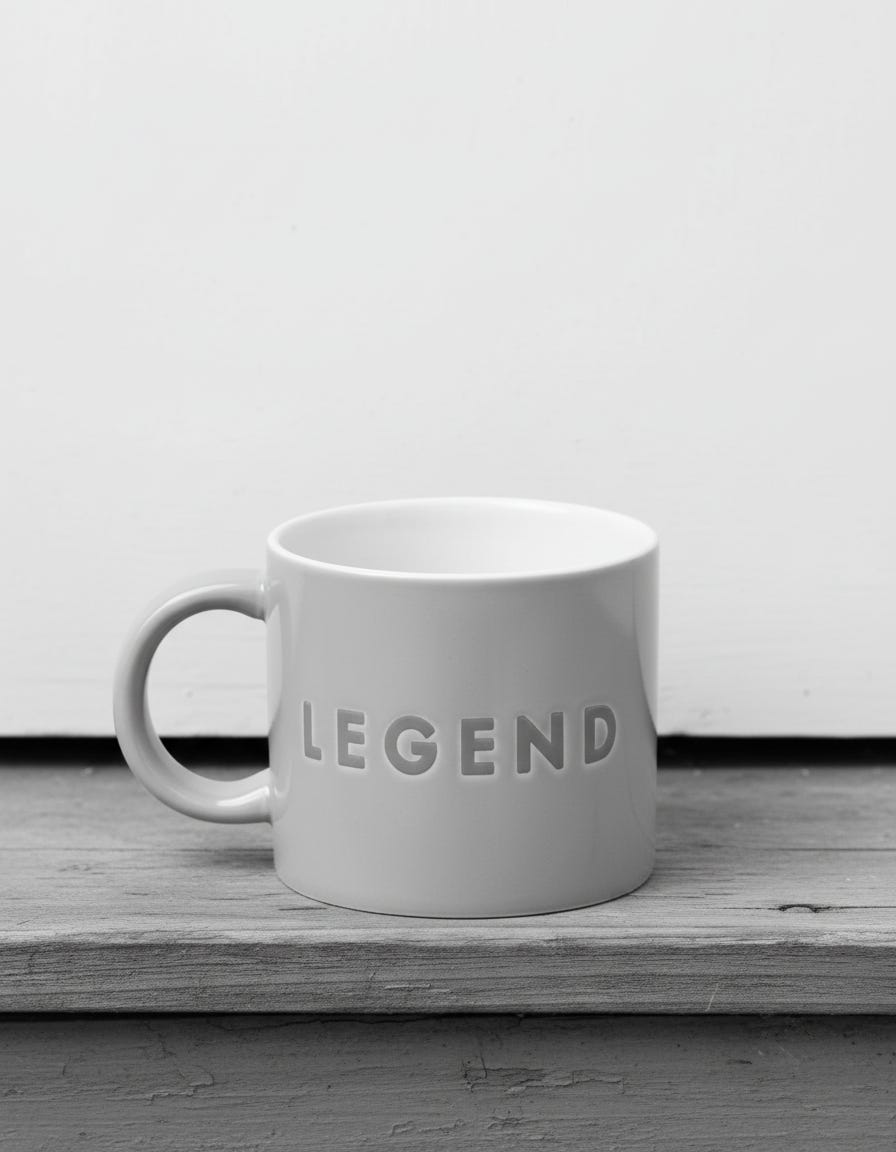
Someone in the flats gave him a mug that said “LEGEND”. It was meant as a joke. He posted a photo of it next to a bag of porridge oats.
The likes climbed slowly. A few comments. One from a woman called Bev: “You’re doing amazing work.” Another with clapping hands.
He rang the bell again the next day. Slower this time. More deliberate.
He didn’t bring the heroin. Mike had messaged three times, the last one just saying “please”. He saw him through the stairwell glass, sitting with his back to the wall, knees pulled up, head down.
He walked past. Left a tin of peaches on someone’s doorstep. Took a photo. Tried it in black and white first, then colour. Posted both. “Still going. Still caring.”
By the end of the week, he added a donation link to the page. “To support the work,” he wrote. People gave what they could. A tenner. A fiver. A woman sent forty quid and said she wished she could do more.
He started crossing the landings quicker. Eyes forward. Bag held tight against his side. Not because he was in a rush — he just didn’t want to get stopped.
The druggies were the worst for that. The way they watched him. The way they hovered by their doors, waiting for a chance to speak. Faces drawn tight, hands twitching, breath sour even through the masks.
One of them — skinny lad from 5C — tried to approach him on the stairs. Reached out a hand, said something about needing help, about not sleeping, about shaking so much he couldn’t hold a cup.
He stepped sideways, out of reach.
Said, “I’m not here for you.”
Kept walking.
The lad said something else — a kind of wet, choking sound — but he didn’t turn around. He found himself annoyed, not by the suffering, but by the interruption. By the way it disrupted the pace of the round he’d planned.
He wished, more and more, that they’d stop coming up to him. Their smell. Their need. The way they looked at him like he owed them something. He wanted the building clean of them. Just the decent ones left — the ones who said thank you, and who smiled for the camera.
Once, he caught his reflection in the lift, holding the bell in one hand and the bag in the other, and thought: it would be easier if they weren’t here at all.
He rang the bell at the top of the stairs. Listened to the sound roll down the concrete shaft. Someone opened a door and said, “He’s here,” almost soft, like a prayer.
He liked that.
He adjusted the strap on his shoulder, stepped over a discarded blanket someone had left outside a door — didn’t look down, didn’t check if anyone was under it — and kept going up.

I read this with that slow, sick oh no grin you get when the horror is entirely administrative. Nothing dramatic—just better lighting, cleaner optics, nicer bags. Bread instead of drugs. Notes instead of answers. A bell instead of a conscience. Chilling.
The way goodness turns into branding one tiny choice at a time is so quietly nasty. Hashtags creeping in. The cropped photo. The LEGEND mug. The bell shifting from signal to summons. And the worst part? How the suffering isn’t inconvenient because it’s sad—but because it interrupts the schedule. That moment did damage.
By the end, stepping over the blanket without checking felt like the thesis delivered without raising its voice. No villain speech, no judgment—just a man who likes being announced. And yeah. That landed hard.